





















Manufacturing runs on thin margins and complex supply chains, but legacy systems and spreadsheets can’t keep up with fast-changing production demands. Odoo solves this by unifying production planning, inventory, quality control, and financials in one scalable ERP giving manufacturers real-time visibility into costs, stock levels, and shop floor performance without juggling disconnected tools.
Table of Contents
What Makes Odoo Suited for Manufacturing
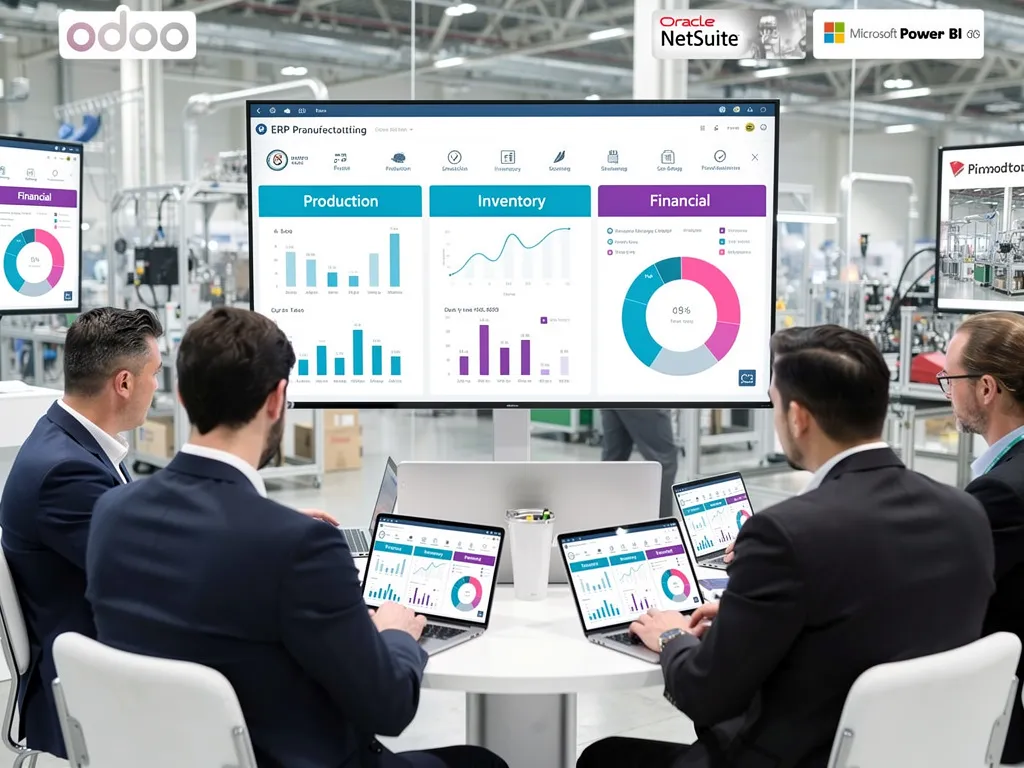
Odoo is a modular, open-architecture ERP system that allows manufacturers to deploy only the applications they need while retaining the flexibility to scale as operations grow. Its Manufacturing module integrates directly with Inventory, Purchase, Quality, and Accounting, creating a continuous flow of data from raw material procurement through to finished goods and financial reporting.
This level of integration eliminates the data silos that typically form when manufacturers rely on multiple disconnected tools. Production managers, procurement teams, and finance departments work from the same real-time data, which reduces errors and improves decision-making across the organization.
Book a free consultation with our Odoo Silver Partner team and get a tailored roadmap for your manufacturing business.
Core Manufacturing Capabilities in Odoo
Production Planning and Scheduling
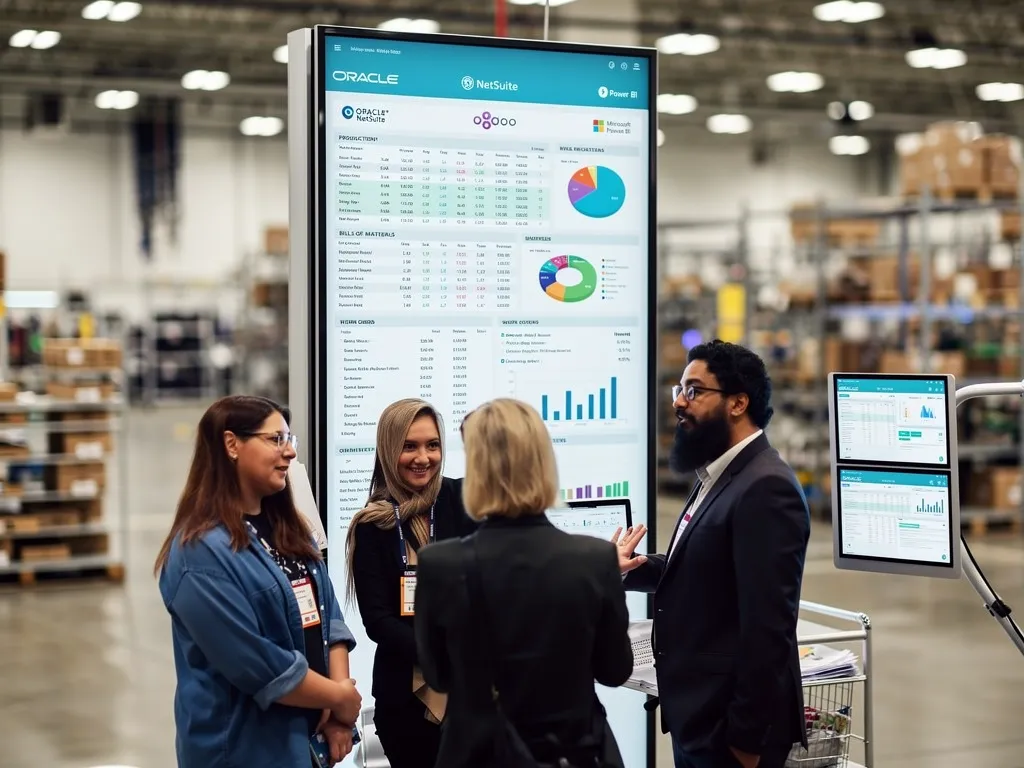
Odoo’s Master Production Schedule (MPS) and Manufacturing Resource Planning (MRP) tools allow manufacturers to forecast demand, plan production runs, and allocate resources efficiently. Work orders are automatically generated based on bills of materials (BOMs) and routing configurations, reducing manual planning effort.
Bills of Materials and Routings
Manufacturers can define multi-level BOMs, including variants and by-products, alongside detailed routings that specify the work centers, operations, and time required for each production step. This precision supports accurate costing and more reliable delivery timelines.
Inventory and Warehouse Management
Odoo’s Inventory module provides real-time tracking of raw materials, work-in-progress, and finished goods across multiple warehouses. Automated reordering rules and barcode scanning reduce stockouts and excess inventory, directly improving working capital efficiency.
Quality Control
Built-in quality checkpoints can be configured at various stages of the production process, allowing manufacturers to catch defects early and maintain compliance with industry standards. Quality alerts and corrective action workflows help formalize continuous improvement processes.
Maintenance Management
Odoo’s Maintenance module supports preventive and corrective maintenance scheduling for equipment, reducing unplanned downtime and extending the useful life of manufacturing assets.
Costing and Financial Integration
Because Manufacturing is natively connected to Accounting, manufacturers gain accurate, real-time visibility into production costs, including materials, labor, and overhead. This integration supports more informed pricing decisions and stronger margin control.
Odoo Manufacturing vs. Other ERPs
Manufacturers rarely pick Odoo in a vacuum most are weighing it against NetSuite or Oracle. The differences show up fast in cost and timeline, not just features.
| Odoo | Oracle NetSuite | Oracle EBS / Fusion | |
|---|---|---|---|
| Typical implementation | 1–4 months ERP Research | 4–9 months ERP Research | 8–14 months |
| Starting cost | From $24.90/user/mo ERP Research | From $99/user/mo ERP Research | Enterprise-tier, quote-based |
| Best fit | SMB — mid-market | Scaling mid-market | Large, complex enterprises |
Odoo wins on speed and cost control Oracle wins on depth for high-complexity, multi-entity operations. Explore the tradeoffs further in our NetSuite vs. Odoo comparison, or check Oracle EBS and Oracle Fusion if enterprise scale is the priority.
Business Benefits of Implementing Odoo in Manufacturing
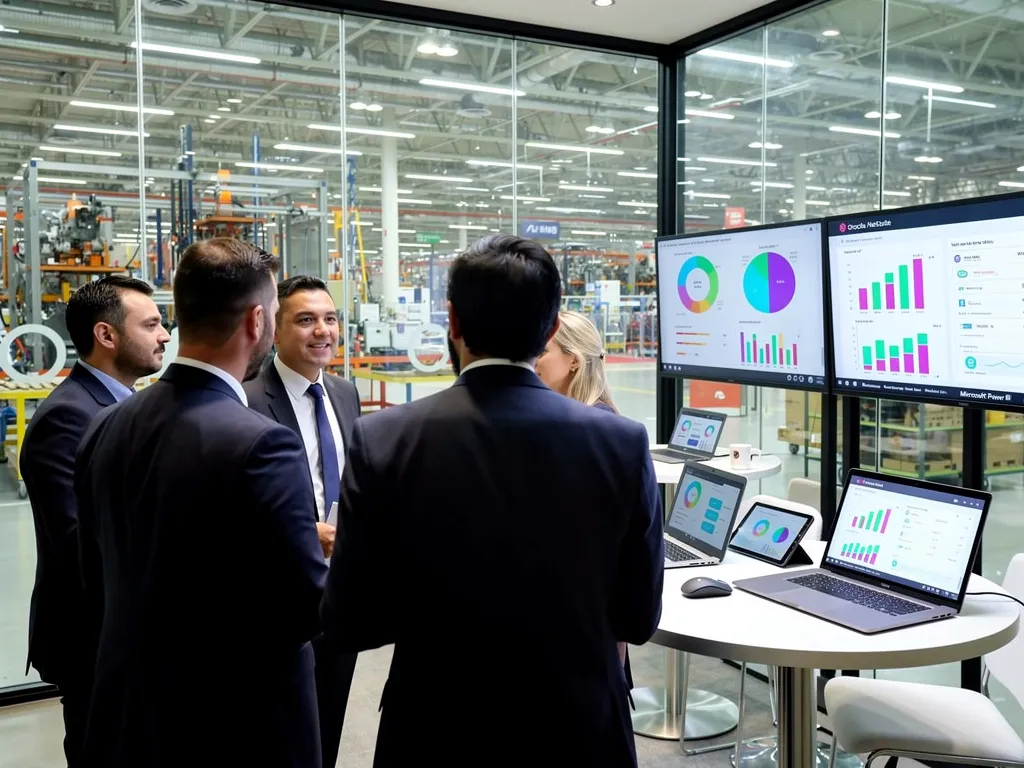
- Improved operational visibility: Centralized data across production, inventory, and finance supports faster, better-informed decisions.
- Reduced manual work: Automated work order generation, reordering, and reporting reduce administrative overhead.
- Scalability: Odoo’s modular structure allows manufacturers to add functionality, such as advanced analytics or additional warehouses, as the business grows.
- Lower total cost of ownership: Compared to many legacy ERP systems, Odoo’s licensing and implementation costs are typically more accessible for small and mid-sized manufacturers.
- Better compliance and traceability: Lot and serial number tracking, combined with quality management tools, support regulatory compliance and recall readiness.
See how Odoo Manufacturing can unify your shop floor from production to quality control. Get in touch today.
Industry Fit: Pipe, Steel, and Process Manufacturing
Not every shop floor looks the same pipe and steel manufacturers live and die by lot tracking, mill certs, and cut-to-length inventory. Generic ERP setups miss this. Odoo doesn’t, when configured right and it maps closely to what ISO 9001 traceability standards actually require: full history, from raw material to shipment.
We’ve built a dedicated approach for this exact niche see Odoo for Pipe and Steel for how we handle lot tracking, mill test certs, and cut inventory.
Key Considerations Before Implementation
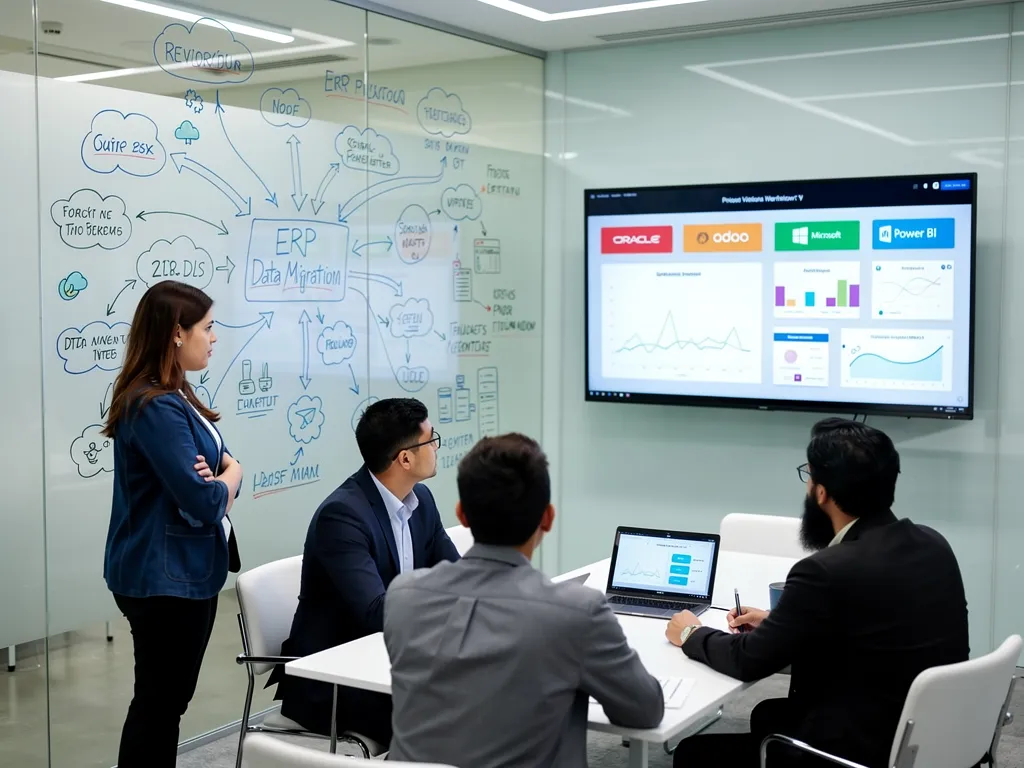
Manufacturers evaluating Odoo should assess their existing production workflows, data quality, and integration requirements before implementation begins. A structured discovery phase helps identify which modules are needed, how BOMs and routings should be configured, and what customizations, if any, are required to reflect specific production processes. Data migration from legacy systems, particularly historical inventory and BOM data, should be planned carefully to avoid disruptions during go-live.
Working with an experienced implementation partner reduces the risk of scope creep, ensures the system is configured to match real production requirements, and supports a smoother transition for shop floor and back-office teams alike.
How Bay Forward Supports Manufacturing ERP Implementations
Bay Forward specializes in deploying and optimizing Odoo for manufacturing businesses, combining ERP expertise with data-driven insight into production and financial performance. From initial process assessment through configuration, data migration, and post-launch support, Bay Forward helps manufacturers implement Odoo in a way that reflects their actual operations rather than a generic template.
Manufacturers considering Odoo as their ERP platform can rely on Bay Forward’s experience across accounting, analytics, and system integration to ensure the platform delivers measurable improvements in efficiency, cost control, and production visibility.
Frequently Asked Questions
How long does an Odoo manufacturing implementation typically take?
Timelines depend on the complexity of a manufacturer’s BOMs, routings, and integration needs. Implementation follows discovery, configuration, data migration, and testing before go-live. Straightforward operations with clean legacy data move faster; multi-level BOMs or extensive historical inventory data require more planning time.
How much does it cost to implement Odoo for a manufacturing business?
Because Odoo is modular, manufacturers pay only for the applications they need, making it more accessible than many legacy ERP systems. Cost depends on the number of modules deployed, BOM and routing complexity, and any customizations required. Native integration across Manufacturing, Inventory, Purchase, and Accounting also avoids extra costs from connecting separate tools.
Is Odoo a good fit for small and mid-sized manufacturers?
Yes. Its modular, open-architecture design lets smaller manufacturers deploy only what they need, such as Manufacturing and Inventory, while scaling up with analytics or additional warehouses as they grow. Combined with lower licensing and implementation costs, Odoo gives smaller manufacturers enterprise-level capabilities without enterprise-level overhead.
Does Odoo support traceability and compliance for regulated industries?
Yes. Lot and serial number tracking lets manufacturers trace materials and finished goods throughout production. Paired with configurable quality checkpoints, quality alerts, and corrective action workflows, this supports compliance and recall readiness with a complete, accurate record instead of manually reconciled data.
How does Odoo help reduce unplanned downtime on the shop floor?
Odoo’s Maintenance module schedules preventive and corrective maintenance for equipment, reducing unexpected failures and extending asset life. Because maintenance scheduling works alongside production planning, maintenance windows can be factored into work order generation, keeping production schedules realistic.
What role does an implementation partner like Bay Forward play?
An experienced partner reduces the risk of scope creep and ensures Odoo is configured around actual production requirements, not a generic template. Bay Forward supports manufacturers from process assessment through configuration, data migration, and post-launch support, helping define BOMs and routings correctly and migrate data without disrupting operations.