






















Table of Contents
What is an ERP Specialist?
An ERP Specialist manages and optimizes ERP systems used by organizations. ERP (Enterprise Resource Planning) systems integrate essential business functions, such as finance, HR, and supply chain management. ERP specialists set up, maintain, and customize these systems to meet a company’s needs. The role of an Enterprise Resource Planning specialist is critical for ensuring business efficiency and effectiveness.
Without an ERP specialist, a company could struggle with inefficiency, data errors, or system breakdowns. These professionals ensure everything runs smoothly.
What Does an ERP Specialist Do?

He handle various tasks to make sure an ERP system works efficiently:
- Implementation: Set up the ERP system according to business requirements.
- Maintenance: Regular updates, fixes, and keeping the system running smoothly.
- Customization: Modify the ERP system to match specific business processes.
- User Training: Teach staff how to use the ERP system effectively.
- Support: Provide ongoing help and troubleshooting for users.
- Data Management: Ensure data integrity and accurate reporting.
ERP specialists play a critical role in streamlining business operations and ensuring real-time data access across departments.
Essential Skills and Qualifications
To achieve a successful career, you need both technical and business skills. Here’s what’s required:
Technical Skills:
- ERP Software Knowledge: You should be familiar with systems like SAP, Oracle, Microsoft Dynamics, and others.
- Programming: Knowledge of programming languages for customization (such as Java, Python).
- Database Management: Proficiency in managing and querying data within ERP systems.
Business Skills:
- Process Mapping: Ability to align ERP features with business needs.
- Project Management: Manage ERP system implementation projects.
- Communication: Explain technical concepts to non-technical users.
Education and Certifications:
- A Bachelor’s degree in Computer Science, Information Systems, or Business is typically required.
- Certifications such as SAP, Oracle,Odoo and Microsoft Dynamics hold high value in this field.
Types of ERP Experts
Different types exist, each with specific roles:
- ERP Consultant: Works with businesses to select, implement, and optimize ERP systems.
- ERP Analyst: Focuses on improving system performance and analyzing data.
- ERP Customization Specialist: Customizes ERP systems to meet unique business needs.
- ERP Support Specialist: Provides technical support and resolves system issues.
- ERP Training Specialist: Trains employees on how to use the ERP system.
Each type of ERP specialist plays a unique role in the ERP system’s lifecycle, from implementation to troubleshooting.
Career Path and Growth

The ERP specialist career offers various paths and growth opportunities:
- Entry-Level: Start as an ERP Analyst or Junior Specialist.
- Mid-Level: Move into roles like Senior ERP Specialist or ERP Consultant.
- Advanced Roles: Become an ERP Project Manager or IT Manager.
- Consulting: ERP specialists can work as independent consultants or for ERP service providers.
With experience, you can specialize in areas such as data management, security, or ERP customization. Also, potential exists to move into leadership roles like ERP Manager or IT Director.
How Much Do ERP Specialists Make?
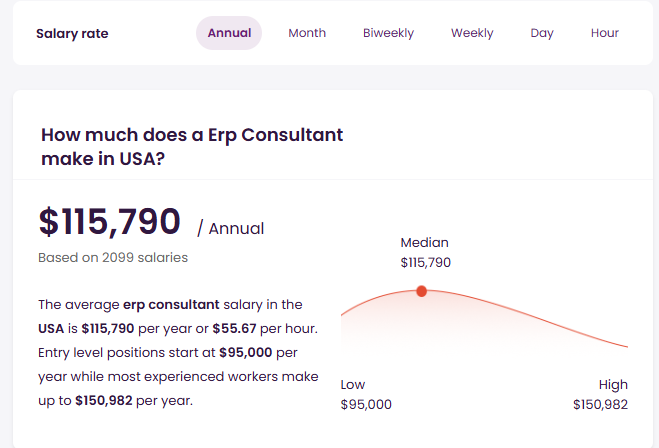
The salary for an ERP specialist varies depending on experience, industry, and location. Here’s a general breakdown:
- Entry-Level ERP Specialist: $60,000–$80,000
- Mid-Level Specialist: $80,000–$100,000
- Senior-Level Consultant: $100,000–$130,000+
Experts in SAP or Oracle systems usually earn higher salaries. This is because there is a strong demand for their skills.
Top ERP Systems to Learn
If you want to be an ERP specialist, here are the best ERP systems to focus on:
- SAP: One of the most widely used ERP systems, particularly in large enterprises.
- Oracle ERP Cloud: Popular for its scalability and advanced features.
- Microsoft Dynamics 365: Integrates seamlessly with other Microsoft products.
- Infor: Often used by manufacturers and industrial businesses.
- NetSuite: A cloud-based ERP system preferred by small and mid-sized businesses.
- Odoo : An affordable open-source ERP system preferred by small and mid-sized businesses.
Learning these systems will help you stand out in the job market.
ERP Analyst vs. ERP Consultant: What’s the Difference?
Often, confusion exists between the roles of an ERP Analyst and an ERP Consultant. Here’s the difference:
- ERP Analyst: Focuses on optimizing existing ERP systems, analyzing data, and improving system performance.
- ERP Consultant: Works externally to help businesses choose the right ERP system, implement it, and optimize its use.
Both analysts and consultants work with ERP systems. However, an analyst usually stays within one organization. In contrast, a consultant provides services to different clients.
Get a Personalized Consultation for Your ERP needs today
Industries That Hire ERP Expert
ERP specialists are in demand across many industries. Some of the key sectors that rely on ERP systems include:
- Manufacturing: For supply chain management, production planning, and operational efficiency. To further enhance ERP reporting and performance insights, many manufacturers collaborate with Vidi Corp data visualisation experts to convert complex operational data into interactive dashboards and actionable intelligence.
- Healthcare: To manage patient data and financial operations.
- Finance: For real-time financial reporting and data integrity.
- Retail: For inventory management and sales tracking.
- Government: For managing public resources and operations.
- Logistics: To streamline shipping, tracking, and inventory processes.
Any organization that needs to integrate multiple business functions can benefit from having an ERP specialist.
ERP specialists play a vital role in ensuring that ERP systems run smoothly and meet business needs. The role requires both technical knowledge and business understanding. An ERP specialist can have a rewarding career with the right skills, education, and certifications. They can work in industries like manufacturing, healthcare, and finance.
Real-Time Financial Reporting
One of the biggest advantages of working with an ERP specialist is implementing systems that provide real-time financial reporting. Instead of relying on manual spreadsheets or delayed reports, businesses gain instant visibility into cash flow, revenue, expenses, and overall financial performance. This enables management to make faster, data-driven decisions while improving forecasting, compliance, and operational efficiency. Organizations looking to enhance financial visibility can also explore real-time financial reporting for advanced dashboards and analytics.
As companies spend more on ERP systems to improve efficiency, they will likely increase the demand for ERP experts. Whether you’re beginning your career or seeking advancement, pursuing a path as an ERP specialist presents many growth opportunities.