




















When we talk about massive, super complex supply chains, the easy assumption is that cloud-native ERP systems hold the future. But here’s the reality check: Oracle E-Business Suite (EBS) isn’t just hanging on, it’s the unbreakable backbone for thousands of global operations, from pharma to automotive manufacturing.
Look, despite all the noise and hype around Oracle Fusion Cloud, EBS remains the core engine for many truly mission-critical supply chain operations. We’re going to explore exactly why Oracle EBS continues to dominate in environments where operational scale, compliance, and deep configurability aren’t just features, they’re survival requirements. This isn’t about the legacy ERP vs modern ERP debate; it’s about what works in the real world.
Table of Contents
What Makes Supply Chain Operations ‘Complex’?
What does ‘complex’ really mean when we talk about a supply chain? It’s more than just shuffling a lot of boxes or having multiple warehouses. Real complexity is born from the intricate layers of operations that demand absolute, millimeter-level precision and control.
Complexity shows up when you’re dealing with:
- Multi-Tier Suppliers and Contract Manufacturers: You’re coordinating a dizzying global network where components traverse multiple vendors, making true end to end visibility a massive challenge.
- Global Shipping and Logistics: Actively managing global shipping, customs, and intricate logistics across numerous regulatory jurisdictions.
- Volume Variability and Lead Times: The desperate need to handle massive, sudden spikes in high-volume order management without the system collapsing often in Just-in-Time (JIT) environments where a two-hour delay can instantly halt an assembly line.
- Compliance and Audit Requirements: The strict demands, particularly in pharma or aerospace, that require absolute traceability of every component back to its source often verified by regulators like the FDA.
These demands require systems built for stability under stress, period. That’s a domain where Oracle EBS SCM modules are uniquely positioned.
Oracle EBS SCM Capabilities That Still Outperform
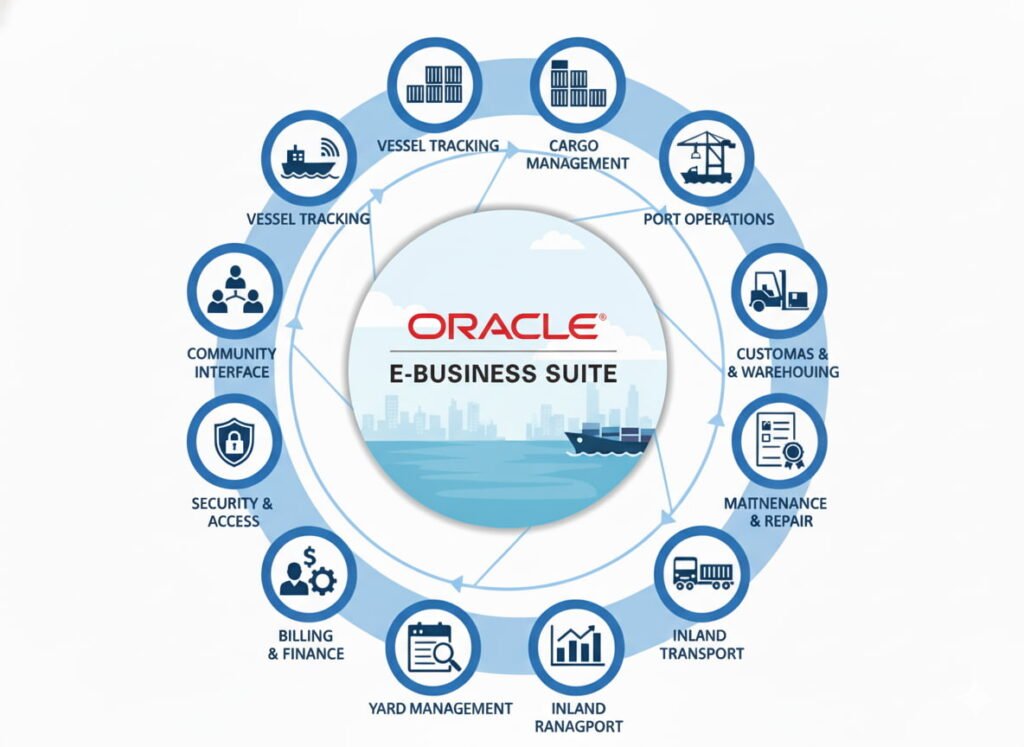
Oracle EBS is relevant not because people are stuck in the past, but because it delivers a depth of functionality that the newer cloud platforms are still scrambling to match.
Tested Modules (WMS, OM, INV, PO, BOM, ASCP)
Oracle’s core Supply Chain Management (SCM) modules—including WMS (Warehouse Management System), Order Management (OM), Inventory (INV), Purchasing (PO), and Advanced Supply Chain Planning (ASCP)—have been stress-tested by real-world use for decades. Think of it this way: every weird edge case, every obscure industry requirement, every time someone said, ‘but what if we need to…’ it’s already been encountered and solved within these apps.
Supply chain directors who’ve tried to replicate their complex, custom picking strategies in new cloud platforms often realize that the cloud architecture simply can’t handle the same depth of zone-based, priority-weighted, or batch-optimized picking logic they relied on.
High Transaction Throughput and Batch Processing
When you’re processing 50,000 orders daily with hundreds of thousands of line items, high transaction throughput isn’t a “nice-to-have,” it’s mission critical. EBS installations are built to handle batch processes that would choke most cloud systems, such as:
- Closing periods with millions of transactions.
- Running Material Requirements Planning (MRP) across thousands of items and multiple plants.
- Generating shipping documents by the tens of thousands simultaneously.
The EBS architecture, designed in an era when system optimization was paramount, delivers proven, raw performance at scale.
Deep Configuration and Extension Capabilities
This is where we push back against the standard cloud pitch. While cloud vendors often preach against customization, the ability to extend the platform isn’t technical debt, it’s often your single biggest competitive advantage.
If the way orders are routed, inventory is allocated, or production is sequenced is genuinely better than competitors, that unique logic needs to be hard-coded into the ERP system. EBS’s flexibility through Forms, Oracle Applications Framework (OAF), and mature APIs allows enterprises to build strategic operational advantages directly into the core system.
Integration with Legacy Systems and MES Platforms
Walk into any large scale manufacturer’s environment and you’ll find a maze of systems: Manufacturing Execution Systems (MES) platforms, specialized quality management tools, and sometimes even applications nobody wants to touch.
EBS plays well with others. Its APIs, database interfaces, and integration points have matured over years of connecting to virtually every imaginable external system. For companies with significant investments in ancillary systems, EBS’s integration maturity minimizes risk during modernization efforts.
Custom Reporting for Regulatory Compliance (SOX, FDA, etc.)
For regulated industries, compliance isn’t optional, it’s the law. When an FDA inspector asks to see batch genealogy or an auditor wants to verify SOX controls, the answers must be immediate, complete, and traceable.
EBS provides the necessary data granularity and reporting flexibility to create the exact compliance reports these industries demand. Compliance officers are never excited about hearing that a critical report feature is “on the cloud roadmap for next quarter.”Next Step for Stability and Performance: If your operational requirements align with these tested capabilities, you may be ready to modernize your system without a full migration. Explore our Oracle EBS SCM modernization services to understand the OCI, upgrade, and coexistence paths available.
Why Enterprises Still Choose EBS Over Cloud ERP for SCM
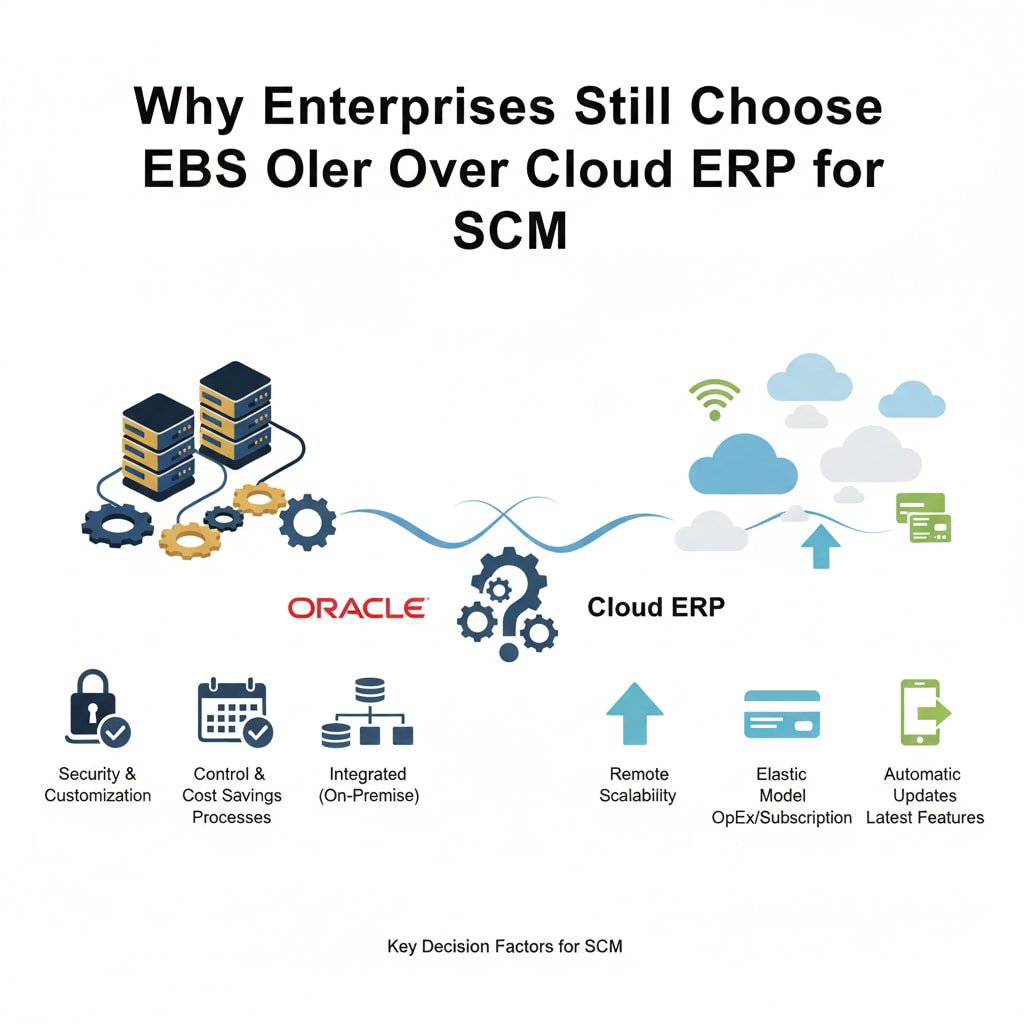
Cloud ERP Lacks Full Functionality Parity in SCM
While Oracle Fusion Cloud is rapidly advancing, many complex execution capabilities like specialized lot tracking, advanced pick to light integration, or complex landed cost allocations still have functionality gaps when compared feature-for-feature with the mature EBS SCM modules. For multi-billion-dollar operations, “maybe it will work” is not an acceptable level of risk.
Customization Is Strategy, Not Technical Debt
Companies that succeed with EBS recognize that their unique business rules and specialized processing logic aren’t merely technical debt,they are competitive moats that differentiate them in the market. Moving to a generalized cloud solution often forces abandonment of these hard-won, value-driving advantages.
Migration Math Doesn’t Add Up
When you do the full math, not just the vendor’s ROI calculator, a full EBS to cloud migration can easily run into the tens of millions. That’s not just software and implementation; it’s the sheer opportunity cost of pulling your best operations people into a year-long testing and training nightmare. For many CFOs, this calculus simply doesn’t favor the massive expense and risk of an overhaul.
For many, upgrading EBS incrementally and moving it to Oracle Cloud Infrastructure (OCI) delivers superior ROI compared to the trauma of a complete application migration.Need Help Deciding? Navigating the cost/risk analysis between EBS and Cloud is challenging. Cut through the vendor hype and Talk to an Oracle SCM expert to get an honest assessment of your specific functionality requirements versus the current Fusion offering.
Real-World Use Cases
1: Global Pharma Manufacturer Using EBS for Batch Tracking
A pharmaceutical manufacturer, a household name, looked seriously at migrating to Fusion but found their highly complex batch tracking requirements were more than the cloud could handle out of the box. Their existing EBS customization, refined over fifteen years, allows them to trace any component in a suspect batch within hours. The migration project? Paused indefinitely because the cost of losing that critical capability was too high.
2: US Based Retailer Managing 10,000+ SKUs with Oracle WMS
A large retailer manages over 10,000 SKUs across a massive distribution network. They built proprietary warehouse optimization logic into their EBS WMS implementation that reduces labor costs by about 15%. Moving to a cloud WMS would mean abandoning these specific, hard won advantages and conforming to a generalized “best practice.” For them, EBS SCM execution is a competitive differentiator they won’t give up.
3: Automotive OEM with Just In Time Supply Network
One automotive OEM coordinates hundreds of suppliers delivering thousands of components with delivery windows measured in hours. Their heavily customized EBS setup complete with integrated supplier portals and real time scheduling logic enables them to run with minimal inventory while maintaining production continuity. Replicating this end to end supply chain visibility in a new cloud system would take years and risk production downtime; the business decision was clear: optimize the existing, proven EBS environment.