
















Odoo ERP implementation costs come from several converging areas: licensing, implementation services, customization and integrations, data migration, hosting, and ongoing training and support. Breaking these pieces down helps procurement and finance teams forecast total cost of ownership (TCO) and build a budget linked to expected business outcomes.
This guide lays out typical cost ranges for small, mid-market, and enterprise deployments, then unpacks each price driver so you can map vendor services to budget line items. You’ll get clear explanations of licensing mechanics, common customization scenarios that increase effort, hosting trade-offs, and practical budgeting tactics like phased rollouts and contingency planning. Concise tables summarize average costs by company size and ROI examples to support stakeholder buy-in.
We also answer common buyer questions, per-user pricing, hidden costs, and realistic timelines so you can build an accurate, defensible Odoo budget for 2026.
Table of Contents
What Are the Average Odoo ERP Implementation Costs by Business Size?
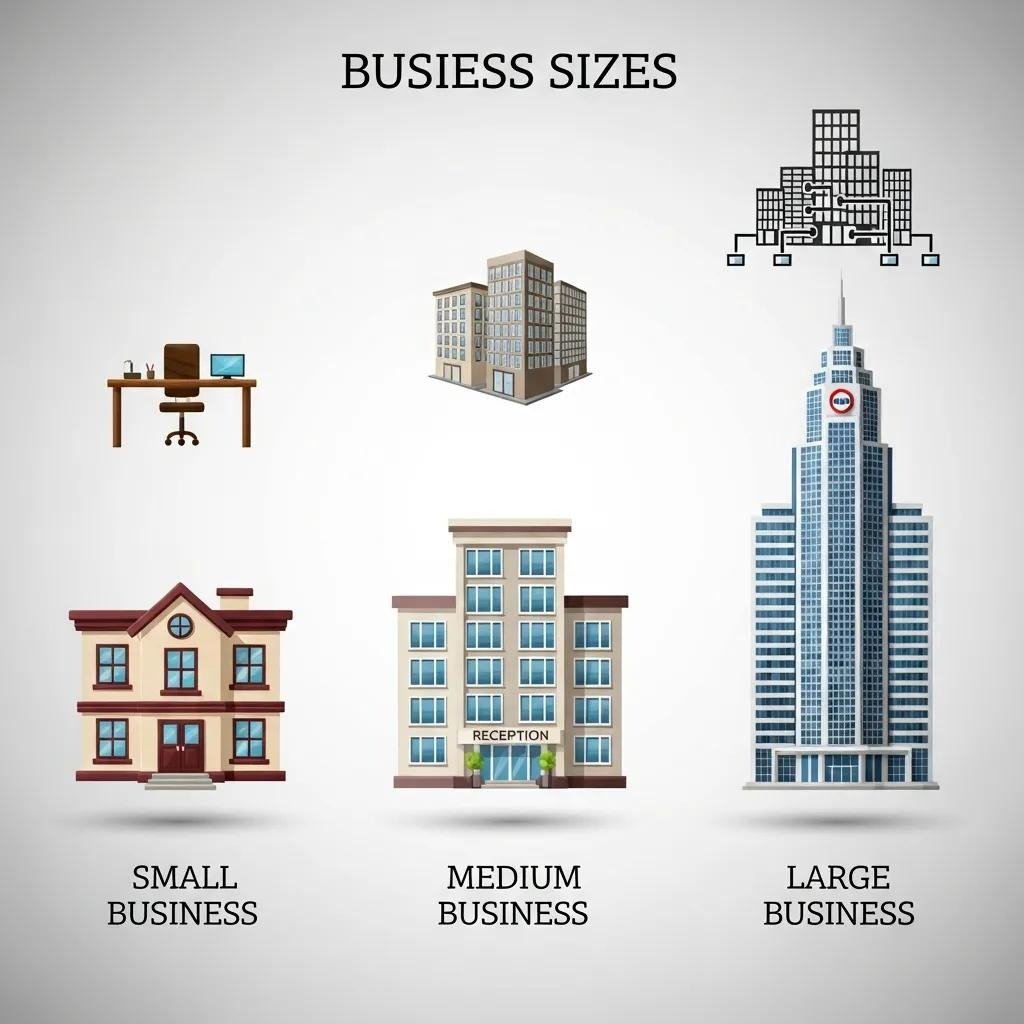
Implementation costs depend on four factors: user count, module count, integrations, and customization.
Small businesses choose fewer modules and minimal customization. This saves money and time.
Mid-market and enterprise companies need more. They connect multiple systems. They add manufacturing tools or warehouses. They hire change management teams. Each addition raises costs and extends timelines.
The table below shows cost ranges, deliverables, and timelines for each budget level.
| Business size | Estimated cost range | Typical included components & typical timeline |
|---|---|---|
| Small (1–10 users) | $5,000 – $20,000 | Basic licensing choices, core modules (accounting, inventory), cloud hosting option, minimal customization, 4–8 week pilot and rollout |
| Medium (11–100 users) | $20,000 – $100,000 | Enterprise licensing, several integrated modules (sales, purchasing, MRP), data migration from legacy systems, moderate custom modules, 3–6 month rollout |
| Large / Enterprise (100+ users) | $100,000+ | Multi-site deployments, complex integrations (third-party warehouses, EDI), heavy customization, formal testing and change management, 6–18+ month delivery |
These bands reflect common project scopes and timelines and are useful for framing initial vendor conversations. The sections that follow show what a small-business scope looks like in practice and where costs typically rise for larger deployments.
How Much Does Odoo Implementation Cost for Small Businesses?

Small businesses want fast results with minimal disruption. They limit modules and avoid heavy customization.
Most small projects include accounting, inventory, sales, and invoicing. Companies choose Odoo Community for free licensing or buy a small number of Enterprise user licenses.
A typical budget covers:
- Software licenses
- Configuration setup
- Data import
- Training sessions
Hidden costs often appear in three areas: data cleanup, custom reports, and later integrations. Budget 10-15% extra for these surprises. Choose hosting and partners that balance cost with reliable launch.
What Are Typical Costs for Medium and Large Enterprises?
Medium and large projects add complexity through integrations, multi-company setups, and vertical modules like manufacturing or distribution, which increases analysis and development effort. Integrations with CRM, e-commerce, EDI, or WMS plus role-based access, advanced reporting, and performance tuning lengthen discovery and raise development rates.
Enterprises should expect staged delivery with pilot sites, user-acceptance testing, and a formal change-management budget to avoid adoption delays that inflate TCO. Because costs grow non-linearly with integration and customization needs, early scoping that defines out-of-scope items and acceptance criteria materially reduces downstream surprises and helps control spend.
What Are the Key Components of Odoo ERP Implementation Pricing?
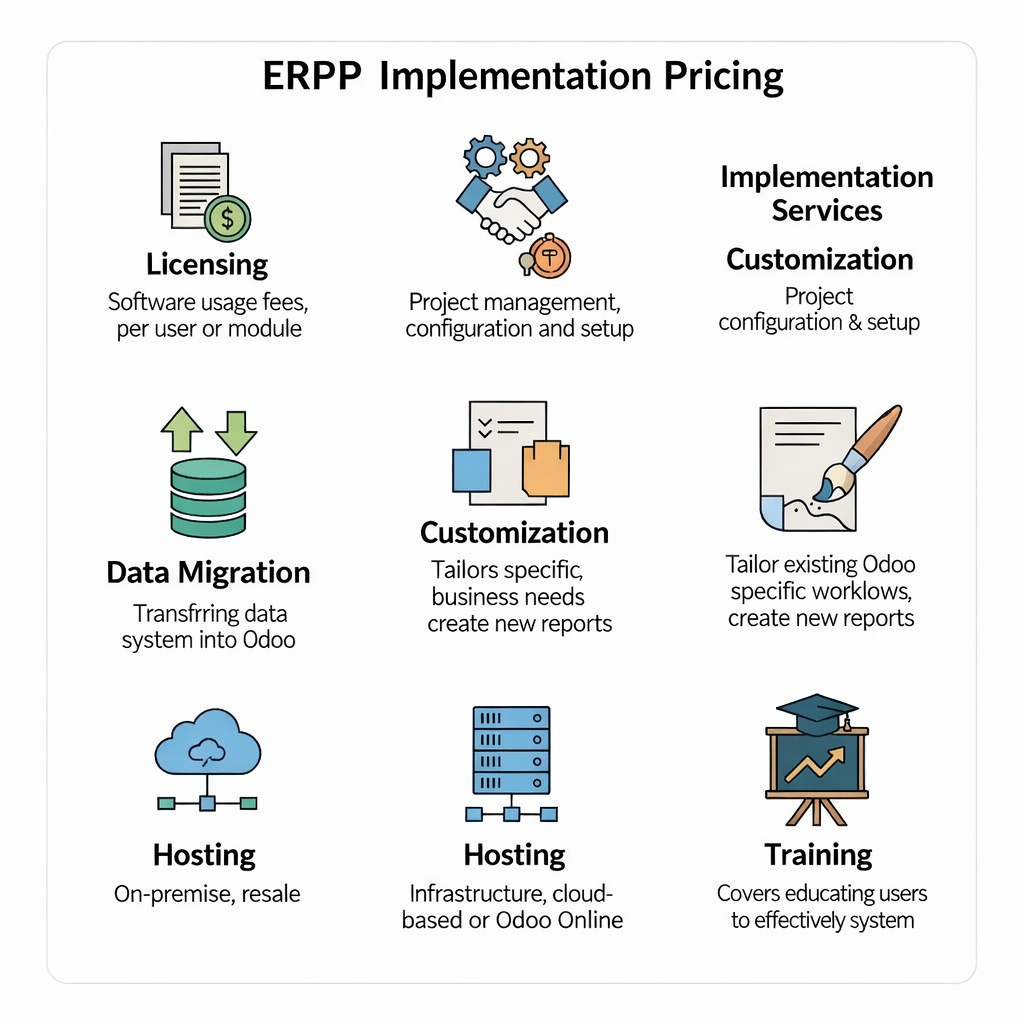
Implementation pricing is the sum of distinct cost components, each with different pricing models and scaling behavior. Key line items are licensing, implementation services (consulting and configuration), customization and development, data migration, hosting, and training/support. Knowing how each component is typically charged (per-user, hourly, fixed) makes it easier to see where budgets are flexible and where costs are recurring or fixed. The table below maps each cost component to what it covers and common pricing patterns so you can prioritize negotiation and scoping.
| Cost component | What it covers | Estimated cost impact / typical pricing model |
|---|---|---|
| Licensing | Access to Odoo Enterprise features or Community alternatives | Per-user, per-app pricing for Enterprise; recurring annual cost that scales with users |
| Implementation services | Requirements, configuration, testing, project management | Time & materials or fixed-price for defined scope; major driver for initial project budget |
| Customization & development | Custom modules, third-party integrations, API work | Typically hourly rates or scoped fixed bids; complexity multiplies hours |
| Data migration | Mapping, cleaning, import scripts, validation | Scopes from light to heavy; billed per source system and data complexity |
| Hosting & infrastructure | Cloud hosting, backups, SLAs, scaling | Options vary: managed PaaS, VPS, or on-premise; ongoing operational costs |
| Training & support | User onboarding, change management, SLA support | One-time onboarding fees plus recurring support/maintenance retainers |
Knowing these components helps you decide where to add contingencies and which services to prioritize early. After mapping costs to project goals, many organizations evaluate implementation partners to allocate responsibilities and reduce internal delivery risk.
When teams evaluate partners, Bay Forward positions itself as an Odoo implementation partner that covers these cost areas like consulting, configuration, customization, data migration, training, and ongoing support. Calling out partner services here helps teams see where vendors typically take ownership and where external help can speed delivery. Ask vendors for transparent time estimates and clear deliverables to reduce uncertainty in budget planning.
This section highlights the main cost drivers so procurement can focus negotiation and scope controls.
- Licensing commitments and user counts drive recurring costs and should be estimated up front.
- Number and complexity of custom modules determine development effort and schedule risk.
- Data sources and data quality directly affect migration effort and testing cycles.
- Hosting SLAs and backup requirements influence ongoing operational budgets.
- Training depth and support SLAs shape recurring maintenance costs.
How Do Odoo Licensing Fees Affect Implementation Cost?
Your license choice affects upfront and ongoing costs. You pick between Community (free) or Enterprise (paid).
Enterprise charges per user, sometimes per app. Prices start at $24 per user per month in 2024-2025. Your costs rise as you add users and modules.
Community has no license fees. But you may spend more on customization and support. Some Enterprise features and hosting services are not available.
Choose annual or monthly billing based on your cash flow needs. Include this in your total cost calculations.
Plan licenses by employee role. Keep subscription costs separate from one-time implementation fees. This prevents budget surprises.
What Are the Costs of Customization and Development for Odoo?
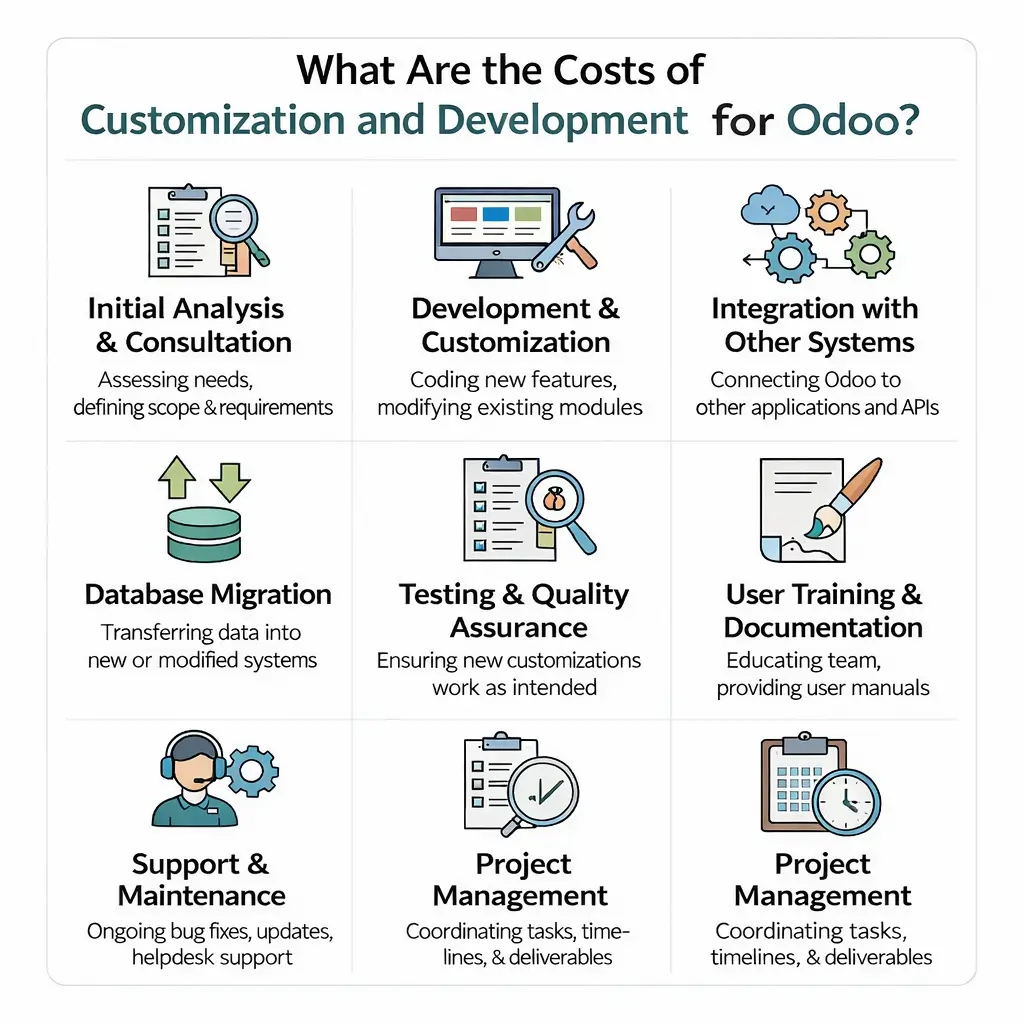
Customization costs depend on complexity and testing needs.
Simple changes cost less: new reports, extra fields, or basic workflows. Developers complete these quickly at standard hourly rates.
Complex work costs more: system integrations or new modules. These need planning, multiple rounds of development, and thorough testing.
Partners charge two ways:
- Hourly rates for flexible projects
- Fixed prices when requirements are clear
Clear requirements reduce budget risk. Map your needs in detail before work starts.
Estimate customization costs early. Break large features into smaller phases. This approach delivers value faster and controls spending.
How Much Does Data Migration Add to Odoo Implementation Costs?
Data migration costs depend on three factors: number of old systems, data volume, and data quality.
Clean, organized data is cheap to move. Messy, inconsistent data requires extensive cleanup and checking.
Migration includes these steps:
- Analyze source data
- Map fields
- Write transformation scripts
- Run test loads
- Reconcile records
- Complete final cutover
Projects fall into three categories:
Light migrations cost less. You move data from one clean system.
Medium migrations cost more. You combine a few systems with some data issues.
Heavy migrations cost the most. You consolidate multiple systems with poor data quality.
Run data audits before migration starts. Use automated mapping tools. Both reduce manual work and speed up testing.
What Are the Hosting Options and Their Associated Costs?
You have two hosting options: cloud or on-premise. Each has different costs and responsibilities.
Cloud hosting (managed platform):
- Provider handles maintenance
- You pay monthly fees
- Costs cover servers, storage, and backups
- Less work for your IT team
On-premise hosting (your own servers):
- You buy hardware upfront
- Your IT team manages everything
- You handle updates and repairs
- Higher initial costs, lower monthly fees
Four factors drive hosting costs:
- Traffic volume
- Data storage needs
- Backup frequency
- Uptime requirements
These factors affect both setup costs and ongoing monthly expenses.
How Do Training, Support, and Maintenance Influence Total Cost?
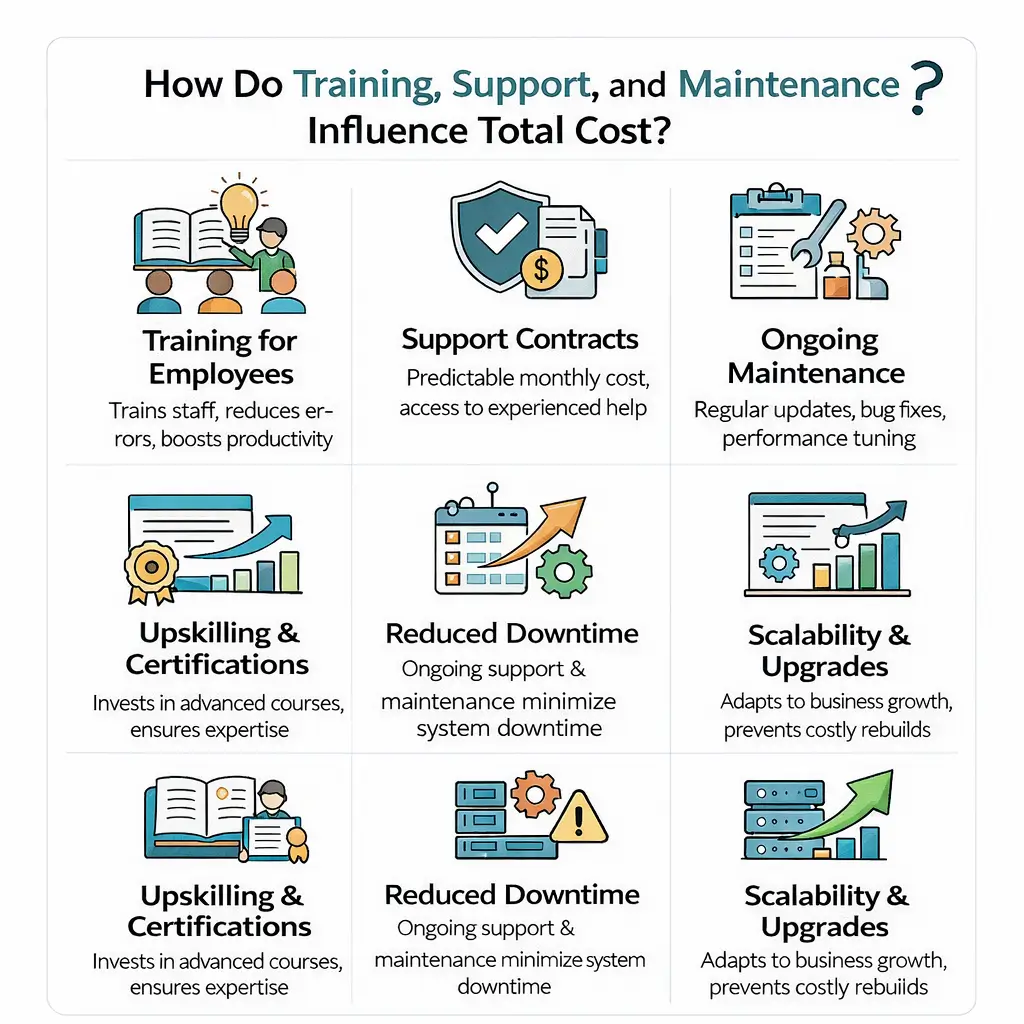
Training and support help users adopt the system. Budget for both upfront and ongoing costs.
Initial training (one-time costs):
- Team workshops
- Role-specific lessons
- In-app guides
Good training reduces support tickets later.
Ongoing support (recurring costs):
- Guaranteed response times
- Bug fixes
- System upgrades
- Security patches
- New features
Include these costs in your total budget. Don’t treat them as optional extras after launch.
Clear training plans save money. Define support levels early. Both prevent expensive emergency fixes later.
Which Factors Influence the Total Cost of Odoo ERP Implementation?
Several variables together define total project cost and timeline; understanding how they interact helps prioritize scope and control budgets. Core variables include business size and user count, module selection and customization level, partner choice and pricing model, data complexity, and uptime or compliance requirements. Quantifying these during discovery lowers contingency needs and enables clearer vendor comparisons.
- Business size and user counts shape licensing and governance effort.
- Module selection determines functional breadth and integration points.
- Partner experience and delivery approach change cost certainty and risk.
- Regulatory or performance requirements may mandate higher hosting or testing budgets.
How Does Business Size and Number of Users Impact Cost?
More users raise costs in four areas: licenses, testing, training, and management.
Small teams (10-50 users):
- Simple role setup
- Basic training sessions
- Quick testing
Large teams (100+ users):
- Complex approval chains
- Structured training programs
- Extensive testing
More users also increase:
- Hosting capacity
- Monthly license fees
- Support requests
How Do Module Selection and Customization Levels Affect Pricing?
Adding vertical modules like manufacturing, MRP, e-commerce, or warehouse management , introduces module-specific configuration, specialist knowledge, and often third-party integrations that extend discovery and testing. Custom workflows, vertical reports, and bespoke automation increase development hours and QA cycles, and they raise future maintenance effort during upgrades. Prioritize modules for early phases to deliver core value quickly and defer complex vertical capabilities to later sprints, smoothing cash flow and lowering initial risk. Clear prioritization and acceptance criteria help prevent scope creep that inflates budgets.
What Role Does Partner Choice and Implementation Approach Play?
Your partner choice affects rates, delivery speed, project planning, and how changes are handled.
Experienced partners cost more per hour. But they finish faster with fewer mistakes. They use proven templates and tested methods.
Three pricing models:
Fixed-price: Set cost for clear requirements. Best when you know exactly what you need.
Hourly rates: Flexible for changing needs. Best for exploratory projects.
Phased pricing: Combines both approaches. Pay fixed prices for each defined phase.
Ask partners for:
- Hour breakdowns by project phase
- References from similar projects
- Clear change request process
This information helps you compare options accurately and reduce risk.
How Can You Budget Effectively for Your Odoo ERP Implementation?
Smart budgeting divides projects into phases: discovery, pilot, rollout, and optimization. Spend most upfront on discovery and pilot to test assumptions. Reserve 10-15% for unexpected costs.
- Start with a discovery budget to validate requirements and avoid low-confidence estimates.
- Allocate a pilot phase to deliver core processes and prove value before enterprise-wide rollout.
- Set a contingency reserve (typically 10–20%) for unforeseen integration or data issues.
- Define acceptance criteria and change request governance to limit scope creep.
What Are Best Practices for Phased Odoo Implementation Budgets?
Phased budgeting launches a basic working system first. You add features later based on user adoption and returns.
A typical budget split:
- Discovery and pilot: 15-25%
- Core rollout and integrations: 50-60%
- Training and optimization: 15-25%
Adjust these percentages based on your risk level.
Start with a pilot group. Test integrations and data migration with limited users. This catches problems early. You avoid expensive fixes during full rollout.
How to Avoid Hidden Costs in Odoo ERP Projects?
Hidden costs appear in five areas: data cleanup, change requests, extra testing, new integrations, and poor training. Each delays launch and drains budget.
Prevent these costs:
- Audit data quality before migration starts
- List excluded items in contracts
- Set time limits for discovery phase
- Define clear testing acceptance rules
Protect your budget with contract terms:
- Cap hourly rates
- Limit discovery hours
- Create clear escalation process
Reserve 10-15% for unexpected issues. Require time estimates for large tasks. This turns unknowns into planned risks.
Bay Forward offers consulting, configuration, customization, data migration, training, and support. These services provide clear budget line items for phased planning.
How Do You Calculate ROI and Justify the Cost of Odoo ERP Implementation?
ERP ROI comes from real operational improvements. You measure time saved, costs reduced, and revenue gained.
Four main benefits:
- Faster transaction processing
- Lower inventory costs
- Fewer manual checks
- Quicker payment collection
Build your business case in three steps. First, measure current problems with actual numbers. Second, estimate efficiency gains conservatively. Third, calculate cost savings and revenue increases from better processes.
Three financial metrics matter:
Payback period: Time to recover your investment.
Net present value (NPV): Total profit after accounting for time value of money.
Total cost of ownership (TCO): All costs—implementation plus ongoing expenses—compared to annual benefits.
| ROI metric | Definition | How to calculate / example |
|---|---|---|
| Payback period | Time to recover initial investment | Total implementation cost ÷ annual cash savings; e.g., $120,000 ÷ $40,000 = 3 years |
| TCO (3-year) | Sum of implementation + 3 years of operating costs | Implementation ($100k) + 3×(licenses+hosting+support $20k) = $160k |
| Annualized savings | Year-over-year cash benefits from efficiencies | Sum of reduced labor, inventory, and error costs; show baseline vs. post-implementation |
What Metrics Demonstrate ROI from Odoo ERP Projects?
Primary ROI metrics include reduced process time (labor hours saved), lower inventory carrying costs (improved turnover), fewer errors (less rework and credits), and revenue uplift from faster order-to-cash cycles. Measure baseline performance over a representative period, then apply conservative improvement estimates from automation and clearer workflows. Combine savings streams into an annualized benefit p to calculate payback and NPV. Present conservative, expected, and optimistic scenarios so stakeholders see upside and downside risk.
How Can Transparent Pricing Improve Your Odoo Investment Decisions?
Transparent pricing makes vendor comparisons easier and reduces negotiation friction by exposing assumptions about scope, hourly rates, and licensing. Ask for itemized proposals that separate discovery, development, migration, training, and support costs so you can compare offers directly and spot hidden fees. A transparency checklist should include deliverables by phase, hour-rate tables, license assumptions, migration tasks, and change-request pricing. With clear pricing, procurement can allocate contingencies and choose a pricing model — fixed-price, time & materials, or phased that matches the organization’s appetite for certainty versus flexibility.
Bay Forward can help with ROI modeling and implementation planning, producing a phased roadmap and cost estimates that stakeholders can sign off on. Running a discovery with a partner reduces estimation risk and yields vendor-aligned budgets you can defend.
What Are the Most Common Questions About Odoo ERP Implementation Costs?
Buyers commonly ask about per-user pricing, hidden costs, Community vs. Enterprise differences, and realistic timelines. Short, direct answers help procurement set expectations and identify topics needing deeper discovery. The H3 items below provide concise clarifications optimized for quick stakeholder Q&A.
- Per-user costs and per-module licensing are a primary recurring expense and should be forecast by role and access needs.
- Hidden costs often come from integrations, data cleanup, and change requests — mitigate with rigorous discovery.
- Community vs. Enterprise choices affect license expense and out-of-the-box feature availability.
- Timelines depend on complexity; small pilots can launch in weeks while enterprise programs may take many months.
How Much Does Odoo Cost Per User and Per Module?
Odoo Enterprise charges per user and sometimes per app. Plan your licenses by employee role to calculate accurate costs.
Three common license types:
- Full users (complete access)
- Portal users (limited access)
- Accountants (finance-only access)
Buy only what you need. This avoids paying for unused licenses.
Per-user pricing makes growth costs predictable. Plan for more users over the next 2-3 years.
Buy licenses in phases. Purchase them as each team goes live. Don’t buy all licenses upfront. This saves cash and reduces waste.
What Are the Hidden Costs of Odoo Implementation?
Hidden costs frequently include data cleanup, unexpected integrations, extended testing, custom reports, and additional training due to low adoption each can add project time and fees. Mitigation includes upfront data audits, explicit exclusion lists in contracts, timeboxed discovery, and mandatory acceptance criteria for each phase. Reserve a contingency (commonly 10–20% for medium projects) and require transparent hourly caps for T&M work to limit surprise charges. Clear governance and documented change-request procedures keep hidden costs visible and manageable.
Is Odoo Free to Use and What Are Licensing Differences?
Odoo Community is open-source and free to use but lacks some Enterprise modules and vendor-hosted services, which can shift cost into customization and operations. Odoo Enterprise is a paid edition that bundles additional apps and official support, with per-user pricing that creates a recurring subscription line in your TCO. Enterprises often choose Enterprise for faster deployment and less custom development, while small organizations may prefer Community to control subscription costs. Decide by mapping your functional needs against out-of-the-box Enterprise features versus the cost to build equivalents in Community.
How Long Does Odoo Implementation Typically Take?
Timelines range from a few weeks for focused small-business pilots to many months for medium and large programs with integrations, heavy customization, and staged rollouts. Key schedule risks are data migration complexity, unplanned feature requests, and availability of subject-matter experts for testing. Accelerate timelines with strong governance, prioritized scope, and dedicated business resources; adding integrations and custom modules lengthens testing and delivery. Use phased delivery schedules to set realistic expectations and reduce the risk of rushed, expensive rework.
Final Thoughts
Odoo ERP implementation costs is essential to budgeting and achieving ROI. By breaking costs into licensing, customization, migration, hosting, and support, you can make informed decisions that align with business goals. Working with an experienced partner streamlines delivery and helps avoid hidden costs. Start with discovery, prioritize high-impact features, and build a phased plan to ensure a smooth transition and long-term value.
Frequently Asked Questions
What are the key benefits of using Odoo ERP for my business?
Odoo brings integrated applications that streamline processes across sales, inventory, finance, and more. Its modular design lets you pick the apps you need and grow over time, keeping the system aligned to real business needs. The interface is intuitive, which helps adoption, and real-time reporting improves decision-making. In short, Odoo can lower operational costs, reduce manual work, and help teams collaborate more effectively.
How can I determine the right modules for my Odoo implementation?
Start by mapping current workflows and identifying bottlenecks. Engage stakeholders across functions to collect requirements, then prioritize modules that solve high-value pain points. For most organizations, beginning with core modules — sales, inventory, and accounting — delivers immediate benefits. Add specialized modules later once core processes are stable and you’ve measured early ROI.
What is the typical timeline for an Odoo ERP implementation?
Timelines depend on complexity and scope. Small businesses can launch focused pilots in 4–8 weeks. Medium-sized projects with integrations and data migration typically take 3–6 months. Large organizations with extensive customization or multi-site rollouts may need 6–18 months. Clear scoping, dedicated resources, and phased delivery help keep schedules predictable.
How do I handle user training during the Odoo implementation process?
Training is critical. Build a training plan that maps to rollout phases and offers role-based sessions so users learn what’s relevant to their day-to-day. Use a blend of workshops, online guides, and in-app help, and collect feedback to refine materials. Post-launch refresher courses and on-demand support increase adoption and reduce support tickets.
What should I include in my contingency budget for Odoo implementation?
Allocate 10–20% of the total project cost for contingencies. Cover potential extra data migration work, unexpected customizations, and extended training. Also budget for schedule slippage if subject-matter experts are unavailable. A contingency protects delivery quality without forcing rushed compromises.
How can I ensure that my Odoo ERP implementation aligns with my business goals?
Define clear business goals and measurable success criteria from the start. Involve key stakeholders across departments, review progress against metrics during each phase, and keep open communication with your implementation partner. After launch, monitor outcomes and iterate to keep the system aligned with evolving priorities.